
 Catalonia Reasserts its Gastronomic Leadership at the Osaka World Expo, Japan, with a Program Led by Chefs Carme Ruscalleda and Joan Roca. The Catalan Government, through the Catalan Tourism Agency (ACT) under the Department of Business and Labor, and Prodeca - Promoter of Catalan Foods from the Department of Agriculture, Livestock, Fisheries and Food, has organized a series of actions aimed at showcasing the power and uniqueness of Catalan cuisine to an international and discerning audience like the Japanese.
These initiatives highlight Catalonia's culinary diversity, offering a wide array of activities designed to captivate and educate visitors about the region's rich gastronomic culture, from its traditional dishes to innovative modern cooking practices.
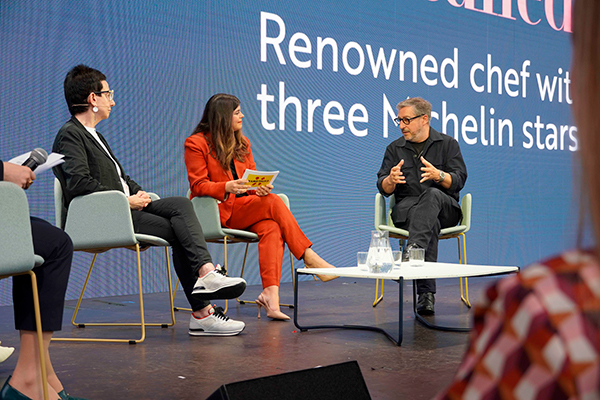
Dialogue between chefs Carme Ruscalleda and Joan Roca
the Catalan Tourism Agency hosted a gastronomic conversation with two of the most renowned figures in both Catalan and international cuisine: Joan Roca, chef of El Celler de Can Roca, and Carme Ruscalleda, the first Catalan chef to earn three Michelin stars. The prestigious chefs engaged in a dialogue about Catalonia's contribution to gastronomic innovation, marking the recognition of Catalonia as the World Region of Gastronomy 2025. This distinction reinforces the country's leadership in values such as sustainability, innovation, respect for local products, and gastronomic excellence.
At the event, it was highlighted how Catalonia, throughout its history, has been a cradle of artistic, scientific, and culinary avant-gardes. In the gastronomic realm, the revolution started more than thirty years ago by Ferran Adrià at elBulli marked a turning point that shook the foundations of global cuisine. Since then, Catalan cuisine has become an international benchmark, also thanks to the efforts of chefs such as Joan Roca and Carme Ruscalleda, who have contributed to placing Catalonia on the global map of culinary creativity. In this context, key issues were discussed, such as the balance between tradition and innovation, the connection between Catalan and Japanese cuisine, the weight of personal and family memory, the use of seasonal products, sustainability, and the need to preserve culinary identity in an increasingly globalized world.
Joan Roca emphasized that "Catalan cuisine is an open and inclusive cuisine, which throughout its history has absorbed recipes and techniques from other cultures. What we are doing now is what our cuisine has always done: preserving the identity of a small territory, but with great diversity and strong personality, while staying open to innovations." On her part, Carme Ruscalleda wanted to emphasize the emotional and sensory connection with seasonal produce, stating, "From a very young age, I learned at home how cooking changes with the seasons: the colors, the smells, and the flavors changed. If we pay attention to the fresh produce markets, we will realize this season's reverence to recreate its seasonal values."
This event aimed to highlight the talent, creativity, and transformative spirit of Catalonia, with a special emphasis on gastronomy as a cultural expression and an international projection tool.
Tomato Bread Workshops and Catalan Wine Masterclasses
Throughout the week, Prodeca – Promoter of Catalan Foods from the Department of Agriculture, Livestock, Fisheries, and Food of the Generalitat de Catalunya – is organizing actions to promote Catalan gastronomy. According to Delia Perpiñà, Managing Director of Prodeca: "Our participation in the Expo aligns with the recognition of Catalonia as the World Region of Gastronomy 2025, a distinction that positions the country as a leader in sustainability, quality, and food culture. This action strengthens the international projection strategy for the agro-food sector."
In this context, the Lleida-born chef Josep Barahona, who has been living in Japan for over 35 years and is the chef of the restaurant L'Estudi in Tokyo, will lead workshops on making pa amb tomàquet (tomato bread), showcasing the richness of this emblematic and universal dish, with Catalan products that are already present in the Japanese market. In each session, participants will make their own version of this iconic dish using ingredients like extra virgin olive oil, garlic, Garrotxa cheese, canned fish, and chocolate.
The program will be completed with masterclasses on Catalan wines, led by sommelier and importer Òscar Salmerón, who will offer tastings of notable wine references from across the country to showcase the diversity of landscapes and wines made in Catalonia.
Special Action with Japanese Influencer and Institutional Agenda
Additionally, yesterday, Prodeca organized a special session with chef Josep Barahona, sommelier Òscar Salmerón, and Japanese actress and influencer Emika Kamieda, known for her connection to Catalan culture. This action aims to bring Catalan gastronomic storytelling to the young Japanese audience. Today, on Catalonia's Honor Day at the Expo, with the presence of the President of the Generalitat, Salvador Illa, Prodeca will host the institutional lunch, a selection of dishes designed to showcase the quality and versatility of Catalan agro-food products and traditional Catalan cuisine.